
Great Poems #8: Invictus
I am the master of my fate, I am the captain of my soul.

Dear Reader,
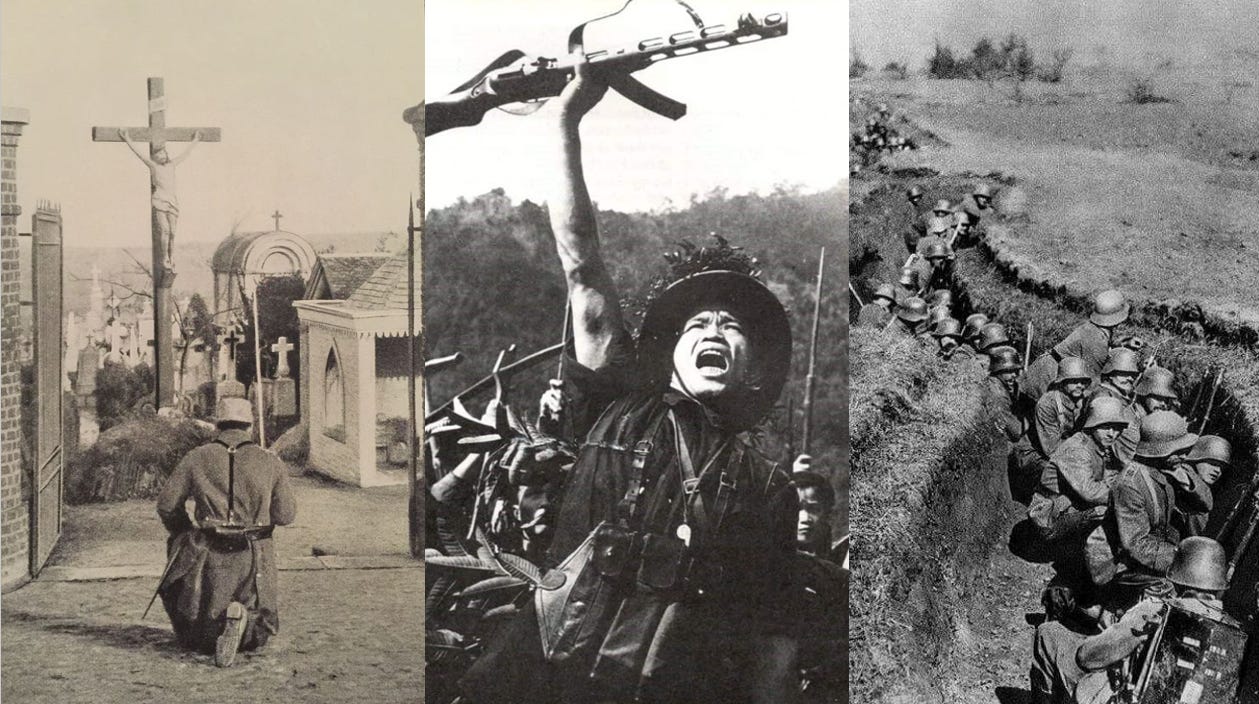
In life, everyone shall undergo hardship. In whatever form it may be - there are many - loss, pain and difficulty are unavoidable. They are not under our control.
There is one thing under our control, however. That thing is how we respond to hardship - and that makes all the difference.
In all, it comes down to two choices. We either have the choice to give up when times are hard, and to allow the harshness and badness to overcome us and consume us so that we remain stagnant and do nothing in the pain; or, second, we choose to fight to overcome the difficulty and to act regardless of pain, making progress nonetheless. Here lies the depth of our choice.
But which is the better?
If I fall into a meat grinder and, because I have fallen in, choose to give up, I will stay under the teeth of the machine and soon be chewed completely into mince. But if I react to the fall with courage, despite the cuts and bruises all over me, I can work to get out of the fangs of pain and still make progress - even if it will be harder for some time. When times are hard, choosing to do nothing is always the worse option.
Remember that the pain is nothing but a test of character, and how we act in these most important times will teach us more of importance than anything else can. Doing nothing is going in reverse. We must always be making progress, even in the hard times. We either gain nothing or gain something - the second option is always best.
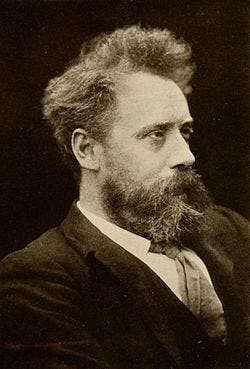
If we were ever looking for a source for this courage needed in order to act in hard times, there lies the poem Invictus (1875) by William Ernest Henley (1849-1903). Henley wrote the poem in an infirmary after an escapade where he almost had to have both of his legs amputated - the worry of which would be daunting enough for anyone, but it was especially so in a time when medical procedures were often uncertain and could bare unforeseen consequences. In the work he describes his own struggle and determination through all of this difficulty.
The poem of four simple stanzas which encourages determination and strength through whatever hardship one may face is a worthy call for action in the most desperate of times. It has the power to drive courage into feeble hearts almost fully absorbed in darkness, or in poor souls drenched in despair, which can bring anyone to triumph through whatever obstacle. It also boasts vivid imagery of the depths of one’s soul, and can invoke stirring passions in anyone who reads it. For these reasons, Invictus has been placed among those on the Great Poems list.
It is also worth noting that the Latin word “invictus” does not easily translate into “invincible” or “unconquerable” as one may think - and a far better translation is the far more fitting “unconquered”. Thus, it is not to say that you are invincible (no human is) and cannot be beaten, but that you are simply not beaten, and that no challenge has stopped your two feet still standing firm. With strength and courage that is how we shall all remain.

Invictus
by William Ernest Henley
Out of the night that covers me,
Black as the pit from pole to pole,
I thank whatever gods may be
For my unconquerable soul.
In the fell clutch of circumstance
I have not winced nor cried aloud.
Under the bludgeonings of chance
My head is bloody, but unbowed.
Beyond this place of wrath and tears
Looms but the Horror of the shade,
And yet the menace of the years
Finds and shall find me unafraid.
It matters not how strait the gate,
How charged with punishments the scroll,
I am the master of my fate,
I am the captain of my soul.
Published: 1888

I hope you found this poem worthy of your reading.
“Let everything happen to you: beauty and terror.
Just keep going. No feeling is final.”
- Rainer Maria Rilke
Always keep fighting.
Kindest regards,
The Everything Scholar